PFAS is generally studied and addressed as its own distinct contaminant class, though some practical filtration overlap exists with other water concerns.
- PFAS is studied and regulated independently given its distinct chemical properties.
- Reverse osmosis systems certified for PFAS often address several other water quality concerns simultaneously.
- Choose PFAS-specific certification while recognizing broader benefits some systems provide.
- This practical filtration overlap doesn’t change the need for specific PFAS certification verification.
Independent Study and Regulation
PFAS research and regulation is conducted independently from other water contaminants, given its distinct chemical properties and specific health effect profile.
PFAS is treated separately because it behaves separately. Most drinking water contaminants of concern are either microbiological, particulate, or metals and minerals, and each of those categories has established treatment approaches that PFAS does not respond to. These are synthetic organic compounds that are highly water-soluble, resistant to the chemical and biological processes that break down most organic contaminants, and biologically active at concentrations orders of magnitude lower than most regulated substances.
The concentration point is the one that reframes everything else. Regulated limits for many contaminants sit in parts per million or parts per billion. The EPA’s enforceable limits for PFOA and PFOS are 4.0 parts per trillion each, which is roughly a thousand times lower than a parts-per-billion standard [1]. Treatment that comfortably meets a parts-per-billion target can be irrelevant at a parts-per-trillion one.
Conventional municipal treatment illustrates the gap. Chlorination, coagulation, sedimentation and sand filtration are effective against the contaminants they were designed for and do not meaningfully remove PFAS. A utility can be fully compliant across its entire regulated portfolio and still deliver water carrying PFAS, which is exactly why a separate standard was needed rather than an adjustment to existing ones.
Regulatory treatment is separate too, and currently unsettled. The 4.0 ppt limits for PFOA and PFOS were finalised in April 2024 and remain enforceable with a compliance date of April 26, 2029. In May 2026 the EPA proposed an optional extension of that date to 2031 and, separately, rescission of the standards covering PFHxS, PFNA, HFPO-DA and the Hazard Index. Both are proposals rather than final rules, with litigation pending.
Some Filtration Technology Overlap
Reverse osmosis systems certified for PFAS reduction often also address several other water quality concerns simultaneously, providing some practical multi-contaminant benefit.
The overlap is real but it runs in one direction only, and the asymmetry is the practical point. Technologies chosen for PFAS often address other contaminants as a side effect. Technologies chosen for other contaminants rarely address PFAS.
Reverse osmosis is the clearest case of useful overlap, and it comes down to mechanism. An RO membrane works by size exclusion, physically rejecting dissolved substances by molecular size rather than adsorbing specific compounds. Because that mechanism is indifferent to which compound it is rejecting, a system certified under NSF/ANSI 58 for PFAS typically also reduces a broad range of dissolved solids, metals and salts at the same time.
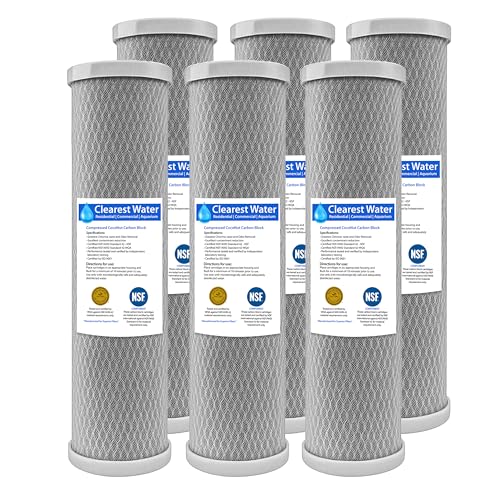
Activated carbon overlaps more narrowly. It is effective against chlorine, many volatile organic compounds, taste and odour issues, and, when specifically certified, PFOA and PFOS. The certification is the operative word: carbon in general does not reliably reduce PFAS, and only a product carrying a listed NSF/ANSI 53 PFAS claim has been validated to do so.
The failure direction is where households lose money. Water softeners address hardness through ion exchange and do not reduce PFAS. UV systems inactivate microorganisms and do nothing to PFAS. Sediment filters remove particulates while PFAS remains dissolved. Nothing about owning a well-equipped water treatment setup implies PFAS coverage.

Practical Takeaway
Choose PFAS-certified filtration specifically for this concern, while recognizing that some certified systems (particularly reverse osmosis) provide broader water quality benefit as well.
Verify each claim individually in the certifier’s own listing rather than reasoning from the technology name. NSF publishes certified drinking water treatment units at info.nsf.org/Certified/DWTU, and a WQA Gold Seal listing carries equivalent ANSI-accredited weight against the same standards.
Read which compounds a certification actually covers, since this is where two products look identical and are not. The baseline PFAS claim covers PFOA and PFOS. A 2022 update to the standards added PFHpA, PFHxS, PFNA and PFBS and introduced a broader Total PFAS claim. Both a narrow and a broad certification support the phrase PFAS certified on packaging.
One number is worth carrying away from all of this. The NSF/ANSI acceptance criterion for a PFAS claim is bringing combined PFOA and PFOS to 20 ppt or below from a defined challenge concentration, while the EPA’s enforceable limit is 4.0 ppt for each compound individually. Certification proves substantial, independently verified reduction. It does not by itself prove your treated water sits under the federal limit, which is why testing treated water matters most where untreated concentrations are highest.
Be specific about NSF/ANSI 401 as well, since it is a common and consequential misread. That standard covers emerging compounds such as pharmaceutical and personal care residues and does not cover PFAS at all.

FAQ
If my filter addresses general water quality, does it also handle PFAS?
Not necessarily — verify specific NSF/ANSI 53 or 58 PFAS certification separately, even though some systems (particularly reverse osmosis) do address multiple concerns simultaneously.
Does my water softener help with PFAS?
No. Softeners use ion exchange targeted at hardness minerals such as calcium and magnesium, and they are not certified for or effective against PFAS. Softening and PFAS reduction are separate jobs requiring separate equipment.
If my utility meets all its regulatory requirements, is my water PFAS-free?
Not necessarily. Conventional treatment processes such as chlorination, coagulation and sand filtration do not meaningfully remove PFAS, and the compliance deadline for the PFOA and PFOS limits is April 26, 2029. Your utility’s annual water quality report is the place to look for actual local numbers.
Why does reverse osmosis cover more PFAS compounds than carbon?
Because of how it works. RO rejects dissolved substances by size exclusion at the membrane rather than adsorbing particular compounds, so the mechanism is largely indifferent to which compound it is blocking. Carbon adsorption is more compound-specific and has to be validated for each claim.
Does a UV system do anything for PFAS?
No. UV disinfection inactivates microorganisms by damaging their genetic material and has no effect on dissolved synthetic chemicals such as PFAS.
Verify specific PFAS certification separately rather than assuming general water quality filtration automatically addresses this contaminant.
References
- Per- and Polyfluoroalkyl Substances (PFAS). U.S. Environmental Protection Agency
These statements have not been evaluated by the Food and Drug Administration. This information is not intended to diagnose, treat, cure, or prevent any disease. Content is for informational purposes only and is not medical advice; consult a qualified healthcare provider before starting any supplement. As an Amazon Associate we earn from qualifying purchases.