Basic point-of-use filter costs rarely need financing, but whole-home PFAS treatment systems may warrant financing consideration.
- Point-of-use filters rarely need financing given their low cost.
- Financing becomes relevant primarily for whole-home treatment system installation.
- Compare contractor financing against personal loan or credit options.
- In documented contamination cases, legal remedies against a responsible party are a separate pathway worth exploring with an attorney.
When Financing Becomes Relevant
Point-of-use filters are low-cost enough to rarely need financing; financing becomes relevant primarily for whole-home treatment system installation.
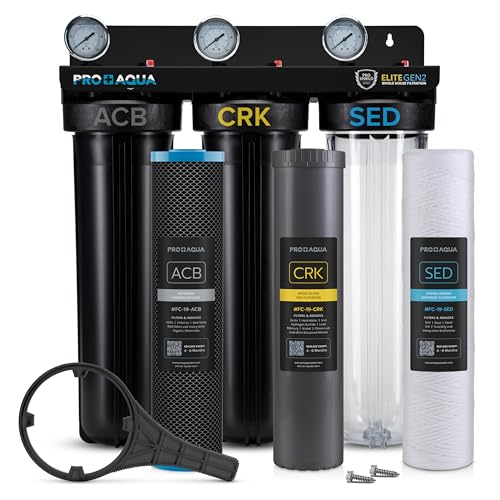
Before deciding whether to finance, separate the one-time cost from the recurring one. Every treatment approach carries a consumable: carbon cartridges and RO membranes are replaced on a schedule, and a system whose filters are not changed stops delivering the reduction it was certified for. Financing the installation while leaving nothing budgeted for replacements is a reliable way to end up with hardware that is technically installed and functionally inert.
It is also worth sizing the problem before sizing the loan. Test results tell you whether you need point-of-use treatment at the drinking tap or point-of-entry treatment for the whole house, and those two answers sit far enough apart in cost that borrowing arranged before testing tends to be either unnecessary or insufficient.
Contractor and Manufacturer Financing
Many water treatment companies offer financing plans for whole-home PFAS systems — compare terms against general personal loan or credit options.
When a water treatment company offers to finance the installation, treat the financing as a second product being sold alongside the first. Ask for the annual percentage rate, the full term, the total amount payable across that term, and whether any promotional rate is a true zero percent or a deferred interest arrangement that applies interest retroactively if the balance is not cleared in time. Those four numbers make an in-house offer directly comparable to anything else.
A quote is also far easier to evaluate once you have a second one, and financing tied to a specific installer can make it harder to walk away from a system that was not the right size for your results.
Comparing the Common Structures
Contractor or manufacturer financing is convenient and sometimes promotional, but is tied to one vendor. A general personal or home improvement loan is unsecured and portable, so it can be arranged before you pick a system. A home equity line is secured against the house, which is what makes its rates lower and its risk different in kind. A credit card is the most expensive of these to carry. The right structure depends less on the equipment than on the term you can realistically finish.
Private Well Households Carry the Full Cost
Households on a private well are in a distinct position. EPA states that private well owners are responsible for delivering safe drinking water to their households, and that the quality and safety of drinking water from private domestic wells is not regulated by the federal government under the Safe Drinking Water Act, nor by most state governments and laws. Around 15 percent of the United States population, over 43 million people, rely on private wells.
There is no utility absorbing the cost and no compliance deadline forcing action, so both testing and treatment are funded entirely by the household.
Legal Remedies in Documented Contamination Cases
In documented contamination cases with an identifiable responsible party, some affected homeowners have pursued legal remedies that could offset treatment costs — a separate pathway from financing, worth discussing with an attorney.
This pathway runs on its own timeline, usually a far longer one than the timeline on which a household needs drinking water. The safer sequence is to solve the water first and pursue any claim independently.

FAQ
Can I get help paying for PFAS treatment if my area has documented contamination from a specific source?
In documented contamination cases with an identifiable responsible party, some affected homeowners have pursued legal remedies — consult an attorney rather than treating this as a standard financing question.
Should I arrange financing before or after testing my water?
After. Test results determine whether you need point-of-use or whole-home treatment, and those differ enough in cost that a loan sized in advance is likely to be wrong in one direction or the other.
Is a zero percent offer from an installer always the cheapest option?
Not necessarily. Ask whether it is a true zero percent promotion or a deferred interest arrangement that applies interest retroactively if the balance is not cleared inside the promotional window.
References
- Private Drinking Water Wells. U.S. Environmental Protection Agency
- Per- and Polyfluoroalkyl Substances (PFAS). U.S. Environmental Protection Agency
This is general information, not legal advice — consult an attorney regarding potential remedies in documented contamination cases.
These statements have not been evaluated by the Food and Drug Administration. This information is not intended to diagnose, treat, cure, or prevent any disease. Content is for informational purposes only and is not medical advice; consult a qualified healthcare provider before starting any supplement. As an Amazon Associate we earn from qualifying purchases.
