PFAS (per- and polyfluoroalkyl substances) are a large family of human-made chemicals used since the 1940s in products that resist heat, oil, stains, grease, and water. Because they break down extremely slowly, they are often called ‘forever chemicals‘ and have been detected in water, soil, air, and food worldwide [1].
This guide walks you through what PFAS are, why they matter for your home’s water, how to test for them, and what filtration options exist — so you can make informed, practical decisions without panic.
- PFAS are persistent synthetic chemicals found globally in water, soil, and living organisms due to widespread industrial and consumer use.
- Health research links certain PFAS to effects on liver, immune, thyroid, and reproductive systems, though most data are for PFOA and PFOS at higher exposures than typical tap water.
- Testing is the only way to know your water’s PFAS levels; certified lab methods (EPA 537.1/533) are reliable, while DIY strips are not.
- Activated carbon and reverse osmosis filters certified to NSF/ANSI 53 or 58 can reduce many PFAS, but no system removes all PFAS forever — maintenance is critical.
- Start with your utility’s report or a well test, then choose a filtration approach matched to your results, budget, and household needs.
What Are PFAS and Why Are They Called ‘Forever Chemicals’?
PFAS refers to thousands of synthetic chemicals characterized by strong carbon-fluorine bonds that make them highly stable and resistant to degradation. This stability is useful in nonstick cookware, water-repellent fabrics, stain-resistant carpets, firefighting foams, and food packaging, but it also means PFAS persist in the environment and can accumulate in living organisms [1].
The term ‘forever chemicals‘ reflects their environmental persistence: they do not break down easily under natural conditions and can travel long distances through water and air. Studies have found PFAS in remote Arctic wildlife, indicating global distribution far from original manufacturing or use sites [2].
In the home, PFAS can be present in tap water due to contamination of source water (rivers, lakes, groundwater) from industrial discharges, firefighting foam use, landfill leachate, and wastewater treatment plant effluent. They can also leach from certain food contact materials, though water ingestion is a primary exposure route for many people [3].
How PFAS Enter Your Home’s Water Supply
PFAS contamination of drinking water typically originates upstream: industrial facilities that manufacture or use PFAS, airports and military bases where aqueous film-forming foam (AFFF) has been used for fire training, and landfills where PFAS-containing products degrade and leach into groundwater. Wastewater treatment plants are not designed to remove PFAS, so they can pass through into rivers and lakes that serve as drinking water sources [4].

Even if your municipal water meets current regulatory standards, PFAS may be present at low levels. Private wells are especially vulnerable if located near potential contamination sources. Because PFAS are odorless, colorless, and tasteless, the only way to know if they are in your water is to test.
Health Concerns: What Research Shows
Laboratory animal studies have shown that exposure to certain PFAS (such as PFOA and PFOS) can affect liver function, immune response, thyroid hormone levels, and development. These findings have informed health advisory levels set by agencies like the U.S. EPA and similar bodies in other countries [5].
Human epidemiological studies have associated higher PFAS exposure with effects on reproductive hormones and pubertal development in both females and males, though causality and dose-response relationships are still under investigation [6]. Research also suggests potential impacts on male reproductive axes from PFAS and related chemicals like bisphenols [7].
It is important to note that most health data come from studies of specific PFAS (mainly PFOA and PFOS) at exposure levels higher than typical drinking water concentrations. The health effects of the thousands of other PFAS, especially newer ‘short-chain’ replacements, are less well understood. Evidence is evolving, and regulatory standards continue to be updated as science advances.
Testing Your Water for PFAS: Options and Limitations
If you are on a public water system, start by requesting the utility’s annual Consumer Confidence Report (CCR) or checking their website for PFAS testing results. Many utilities now test for PFAS voluntarily or due to state requirements. If PFAS are detected, the report should list concentrations for individual compounds (e.g., PFOA, PFOS) and whether they exceed any applicable standards.
For private well owners — or if you want independent verification — you can order a certified laboratory test. Look for labs accredited under EPA Method 537.1 or 533, which analyze for 18-25 PFAS compounds. Typical cost ranges from $300 to $600 per sample. Some states offer subsidized testing programs; check your health or environmental department website.
DIY test strips or low-cost kits sold online generally cannot detect PFAS at the low parts-per-trillion (ppt) levels relevant to health advisories. They may indicate total fluorine or other surrogates, but they are not a substitute for certified lab analysis. If you test, collect the sample carefully following the lab’s instructions to avoid contamination from sampling materials (e.g., certain gloves, tubing, or containers can contain PFAS).
Filtration Technologies That Reduce PFAS
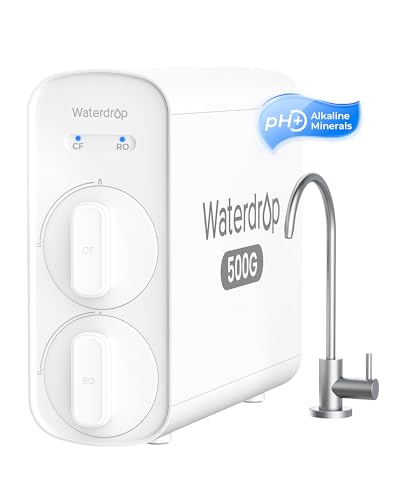
A 2024 review of point-of-use (POU) treatment methods found that activated carbon (especially granular activated carbon, GAC) and reverse osmosis (RO) systems can significantly reduce many PFAS in tap water, though performance varies by compound, water chemistry, and filter age [8]. Ion exchange resins also show promise, particularly for shorter-chain PFAS that carbon may not capture as well.
For whole-house (point-of-entry) treatment, GAC tanks or RO systems are options but are more expensive ($1,500–$4,000+ installed) and require professional sizing and maintenance. POU systems — under-sink RO ($200–$600 plus installation) or carbon block filters ($50–$150 for cartridge systems) — treat water at a single tap (usually the kitchen sink) and are more affordable for most homeowners.
No filter removes 100% of all PFAS indefinitely. Carbon filters lose effectiveness over time as adsorption sites fill up; RO membranes can degrade. Look for products certified to NSF/ANSI Standard 53 (for carbon) or Standard 58 (for RO) for PFAS reduction claims. Replace cartridges on schedule — typically every 6–12 months for carbon, 2–3 years for RO membranes — and follow manufacturer maintenance guidelines.
Practical Steps for Homeowners Today
1. Check your water utility’s latest PFAS test results. If you have a private well, test through a certified lab. 2. If PFAS are detected above the enforceable EPA limits of 4.0 parts per trillion for PFOA or PFOS (or if you prefer to reduce exposure as a precaution), evaluate filtration options based on your budget, plumbing, and the specific PFAS found. 3. Prioritize treating water used for drinking, cooking, and making infant formula — exposure from showering or dishwashing is generally lower. 4. Maintain any filter system rigorously; an expired filter can release captured contaminants back into the water. 5. Stay informed: PFAS regulations and treatment technologies are evolving rapidly. Revisit your strategy annually or when new local data become available.

FAQ
Can boiling water remove PFAS?
No. Boiling does not destroy PFAS; it can actually concentrate them as water evaporates. Only specific treatment technologies like activated carbon or reverse osmosis reduce PFAS levels.
Are all PFAS equally harmful?
Research has focused most on PFOA and PFOS. Health effects of the thousands of other PFAS, including newer short-chain variants, are less well studied. Regulatory agencies evaluate them individually or in groups as science evolves [5].
Do refrigerator filters remove PFAS?
Most standard refrigerator filters use basic carbon and are not certified for PFAS reduction. Check for NSF/ANSI 53 certification specifically listing PFAS. If not listed, assume it does not reliably reduce PFAS.
Should I test my water if my utility says it’s below the legal limit?
Since April 2024 the EPA has enforced federal Maximum Contaminant Levels for six PFAS, including 4.0 parts per trillion each for PFOA and PFOS; the earlier 2022 EPA health advisories are no longer current.[9] If you want to know the exact concentration — especially if you have infants, are pregnant, or are immunocompromised — independent testing provides more detail than a pass/fail compliance report.
This article provides general educational information, not medical or legal advice. PFAS science and regulations are evolving. For health concerns related to PFAS exposure, consult a healthcare provider. For complex contamination situations, whole-house treatment design, or regulatory compliance, engage a licensed water treatment professional or environmental engineer familiar with PFAS.
References
- A national-scale preliminary overview study of poly- and perfluoroalkyl substances (PFAS) occurrence in aquatic environments of England, UK. Chemosphere, 2026
- Perfluoroalkyl substances (PFAS) in beaked redfish (Sebastes mentella) and cod (Gadus morhua) from arctic fishing grounds of Svalbard. Food additives & contaminants. Part B, Surveillance, 2020
- Perfluoroalkyl substances in food contact materials: preliminary investigation in Vietnam and global comparison. Environmental science and pollution research international, 2023
- From Home to Hazard: Tracking PFAS From Residential Wastewater Through Wastewater Treatment Sludge to Sludge-Derived Ash. Water environment research : a research publication of the Water Environment Federation, 2025
- Recent experimental results of effects of perfluoroalkyl substances in laboratory animals – Relation to current regulations and guidance values. International journal of hygiene and environmental health, 2017
- Associations of prenatal and postnatal exposure to perfluoroalkyl substances with pubertal development and reproductive hormones in females and males: The HOME study. The Science of the total environment, 2023
- Overview of the Mechanisms of Action of Selected Bisphenols and Perfluoroalkyl Chemicals on the Male Reproductive Axes. Frontiers in genetics, 2021
- Removal of perfluoroalkyl and polyfluoroalkyl substances from tap water by means of point-of-use treatment: A review. The Science of the total environment, 2024
- Final PFAS National Primary Drinking Water Regulation. U.S. Environmental Protection Agency
These statements have not been evaluated by the Food and Drug Administration. This information is not intended to diagnose, treat, cure, or prevent any disease. Content is for informational purposes only and is not medical advice; consult a qualified healthcare provider before starting any supplement. As an Amazon Associate we earn from qualifying purchases.
